Skin First, Everything Else Optional: The Quiet Revolution of Doing Less With Your Face
Let's be honest about something: the beauty industry has a vested interest in making you feel like you're not enough. Not glowy enough, not smooth enough, not covered enough, not done enough. The entire commercial apparatus — the launches, the influencer hauls, the before-and-afters — runs on the premise that your face, as it currently exists, is a project in need of completion.
A lot of Americans are starting to reject that premise. Quietly, without a manifesto or a movement name, they're putting down the full-coverage foundation, skipping the five-product eye look, and showing up to their lives with a little SPF and maybe a tinted lip balm. And they're reporting that it feels — there's no other word for it — like a relief.
This is the makeup minimalist movement. And it's more complicated, more political, and more psychologically interesting than it might appear on the surface.
What We Mean When We Say 'No-Makeup Makeup'
First, a clarification: the minimalist beauty movement isn't about abandoning makeup entirely or declaring cosmetics problematic. It's not anti-beauty. It's anti-obligation. The distinction matters.
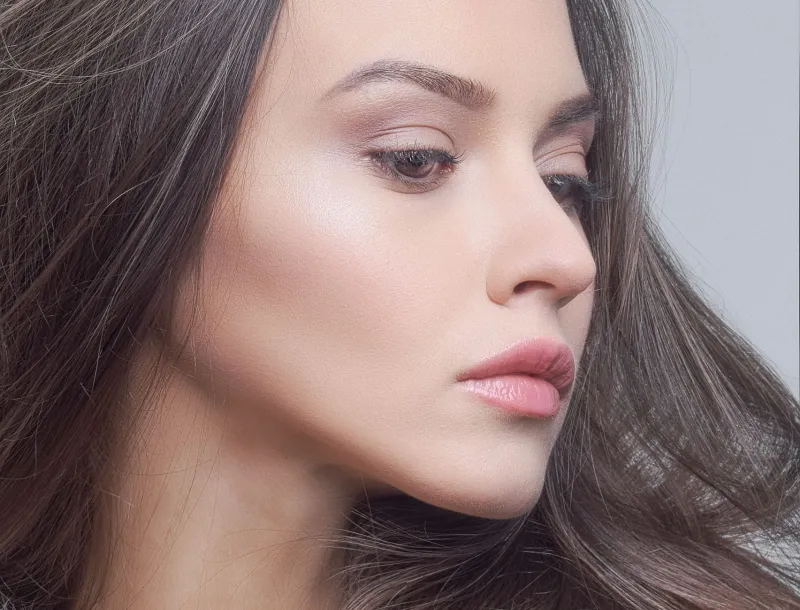
The no-makeup makeup aesthetic — skin that looks healthy rather than perfected, features that are enhanced rather than transformed — has been bubbling up in American beauty culture for a few years now. But what's shifted recently is the motivation behind it. It's moved from a style choice (I want to look naturally pretty) to something closer to a values statement (I want to stop performing a version of myself that costs me an hour every morning and sixty dollars a product).
"I used to spend forty-five minutes on my face every day," says Alicia Tran, a 31-year-old teacher from Austin, Texas. "And I didn't even enjoy it. It was just anxiety management. If I didn't do it, I felt exposed. The moment I realized that the routine was feeding the insecurity rather than fixing it — that was when things started to change."
Tran's experience isn't unusual. Beauty and mental health professionals are increasingly noting the connection between elaborate makeup routines and anxiety, particularly among younger women and people who came of age during peak Instagram culture.
The Psychology of Putting It Down
There's a well-documented phenomenon in psychology called the "enclothed cognition" effect — the idea that what we wear (including what we put on our faces) affects how we think and feel about ourselves. For years, the beauty industry leaned heavily on this research to argue that makeup boosts confidence and performance. And for many people, it genuinely does.
But the research is more nuanced than that narrative suggests. When makeup use is driven by concealment — by the need to hide perceived flaws rather than to express creativity or enhance features — the psychological effects can actually reinforce negative self-image over time. You're not building confidence; you're building dependency.
"There's a real difference between using makeup from a place of abundance and using it from a place of scarcity," explains Dr. Camille Okafor, a licensed therapist in Atlanta who specializes in body image. "Abundance looks like: I feel good today and I want to play with color. Scarcity looks like: I can't leave the house until I've covered everything that's wrong with me. The minimalist movement, at its best, is about shifting from that second place to the first."
This framing recontextualizes minimalist beauty not as deprivation but as psychological liberation. You're not giving something up. You're putting down a weight.
Skincare as the New Foundation
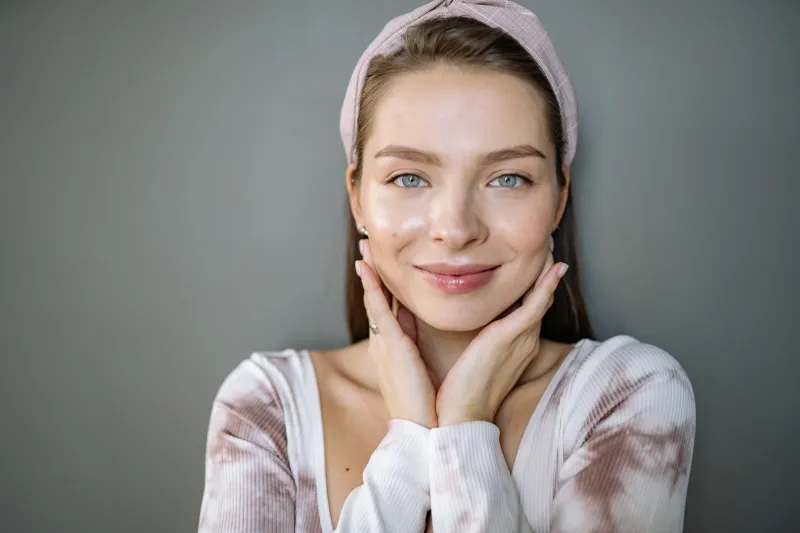
If the movement has a unifying practice, it's the pivot from makeup-first to skincare-first. The logic is simple and surprisingly radical: if your skin is healthy and hydrated, you need less product to feel good about it. Investing in moisturizer, SPF, and maybe a targeted serum or two means you can skip the heavy-coverage base and let your actual skin do the work.
This shift has been quietly democratizing in ways that get overlooked. A solid skincare routine — cleanser, moisturizer, SPF — can be assembled for under thirty dollars at any drugstore. A full makeup kit that achieves the same visual result costs multiples of that. The minimalist approach, paradoxically, is more accessible than the maximalist one.
"Skincare levels the playing field a little," says beauty writer and minimalist advocate Simone Park. "You don't need to know how to apply foundation or contour or blend eyeshadow. You just need to know your skin. That's knowledge anyone can develop."
This accessibility piece connects the movement to broader conversations about anti-consumerism and the democratization of beauty. When the standard is healthy skin rather than a specific product-intensive aesthetic, the barrier to entry drops significantly.
The Anti-Consumerism Thread
It would be naive to talk about minimalist beauty without acknowledging the economic critique running through it. The average American woman spends somewhere between $300 and $500 per year on beauty products, according to various industry estimates. That number climbs significantly for anyone following influencer-driven beauty routines, which are often structured — intentionally or not — around continuous product acquisition.
The minimalist movement pushes back against that cycle. Not necessarily with hostility toward the industry, but with a kind of calm refusal to participate in the churn. You don't need the new palette. You don't need the viral blush. You need a moisturizer that works for your skin and the confidence to walk out the door.
"I think a lot of people are just exhausted," says Park. "Exhausted by the content, by the launches, by the feeling that they're always behind on whatever the current thing is. Minimalism is a way of opting out of that exhaustion."
Less as a Power Move
Here's the thing that surprises people when they first try it: showing up with less on your face can feel like a power move. Not a sacrifice. Not a compromise. A choice made from a place of security rather than insecurity.
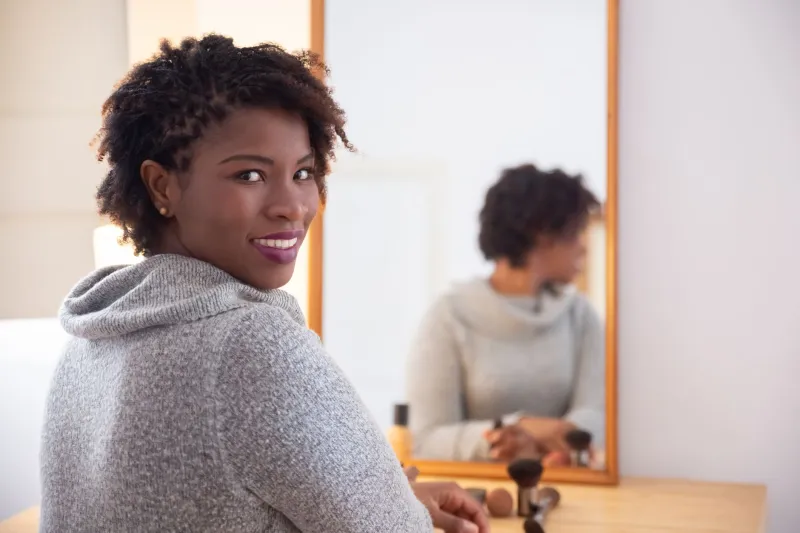
When you stop using makeup to manage how other people perceive you and start using it — or not using it — as a genuine expression of how you feel on a given day, something shifts. The face you see in the mirror starts to feel like yours again.
Every face tells a story. The minimalist movement is just arguing that the story was always good enough to tell without a full production crew.
And honestly? We think they've got a point.