No Rules, All Face: How Trans and Non-Binary Americans Are Rebuilding Makeup From Scratch
Makeup, for most of its commercial history, has been sold as a finishing touch — something you apply to look more polished, more feminine, more acceptable. The rules were baked in from the start: foundation to even out, mascara to open up, lipstick to define. Women wore it. Men, generally, didn't. And the whole system rested on a binary that a growing number of Americans are refusing to participate in.
For trans and non-binary people in the US, makeup has never been just a finishing touch. It's been a tool for survival, a language of self-expression, a way of showing the world a face that actually matches the person behind it. And in the process of figuring out how to use it on their own terms, they've quietly revolutionized what the rest of us think makeup can do.
When the Rules Don't Apply to You, You Make Better Ones
There's a creative freedom that comes from operating outside a system that wasn't built for you. When you're not trying to conform to a beauty standard — because that standard was never designed to include you — you're free to experiment in ways that people inside the system rarely do.
Jordan Vasquez, a 27-year-old non-binary makeup artist based in Chicago, describes their relationship with cosmetics as something that developed outside any traditional framework. "I didn't grow up with a beauty routine that was meant for me," they say. "So I had to figure it out from scratch. And that meant I was never attached to the idea that there was a 'right' way to do any of it."
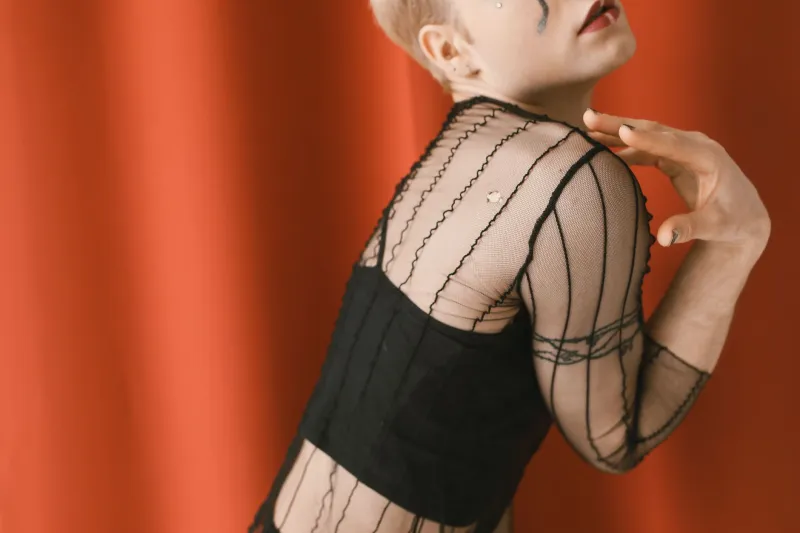
That absence of a prescribed right way has produced some of the most inventive faces in American beauty right now. Graphic liner that doesn't follow the eye's natural shape. Blush placed on the nose and temples rather than the cheekbones. Foundation used selectively to create texture and dimension rather than erase it. Glitter on beards. Bold lips on jawlines that aren't conventionally feminine. The aesthetics emerging from trans and non-binary communities aren't just different — they're genuinely new.
Transition, Expression, and the Space Between
For many trans Americans, makeup plays a specific and deeply personal role in the process of gender affirmation. Femme-presenting trans women may use contouring and highlighting techniques to work with facial structure in ways that cisgender women rarely need to think about. Trans men and masc-presenting non-binary people might use makeup to add shadow and dimension, to masculinize rather than feminize.
But the story doesn't stop there, and reducing trans and non-binary beauty to "makeup as gender correction" misses something important. A huge portion of the community is using makeup to exist in a space that isn't about passing as anything — it's about presenting as themselves, whatever that looks like on a given day.
"Some days I want to look femme. Some days I want to look androgynous. Some days I want to look like a creature from another dimension," laughs Vasquez. "Makeup lets me do all of that. It's not about being a woman or being a man. It's about being me."
This fluid, day-to-day approach to beauty — what some are calling "gender-fluid glam" — is one of the most significant aesthetic innovations coming out of the community. It's makeup untethered from identity performance, used purely as creative expression.
The Mainstream Is Paying Attention
You can see the influence everywhere if you know where to look. The rise of "editorial" makeup in everyday contexts — bold graphic looks that would have seemed costume-like a decade ago — owes a significant debt to the trans and non-binary community's willingness to wear art on their faces in regular life. The normalization of men wearing makeup, which major brands like MAC, NYX, and increasingly mainstream players have started to acknowledge in their marketing, traces a direct line back to the same source.
TikTok has been a particularly powerful amplifier. Trans and non-binary creators have amassed enormous followings by sharing tutorials, transformations, and just-for-fun looks that consistently outperform traditional beauty content in engagement. Their audiences aren't exclusively LGBTQ+ — they're anyone who finds the creativity compelling, which turns out to be a lot of people.
"I think people are hungry for beauty content that isn't about fixing yourself," says Marcus Webb, a trans man and beauty editor based in Brooklyn. "A lot of mainstream beauty content, even when it's trying to be positive, is still operating from a deficit model — here's what's wrong with your face, here's how to correct it. Trans and non-binary creators are often coming from a completely different place. They're saying: here's a face, here's what I want to do with it, let's play."
The Industry Is Catching Up — Slowly
The beauty industry's response to this cultural shift has been uneven, to put it charitably. Some brands have made genuine strides — inclusive shade ranges, gender-neutral marketing, trans spokespeople in campaigns that go beyond tokenism. Others have dabbled in "gender-neutral" aesthetics as a trend vehicle without meaningfully engaging with the community driving those aesthetics.
Vasquez is direct about the distinction. "There's a difference between a brand putting a non-binary person in an ad and a brand actually centering non-binary needs in product development. Like, are you making products for us, or are you using our image to sell products to someone else?"
It's a fair question, and one the industry is going to have to answer with more than marketing budgets.
What This Means for All of Us
Here's the thing about creative revolutions: they don't stay contained. The innovations that trans and non-binary Americans have developed in their approach to makeup — the fluidity, the playfulness, the refusal to use cosmetics as a conformity tool — are seeping into mainstream beauty culture in ways that are genuinely liberating for everyone.
When makeup stops being about following rules and starts being about telling your own story, it becomes something more interesting. More personal. More powerful.
Every face tells a story worth celebrating. The trans and non-binary community has been living that truth for years. The rest of us are just starting to catch up.