Pores, Freckles, and Fine Lines: America Is Finally Falling in Love With Real Skin
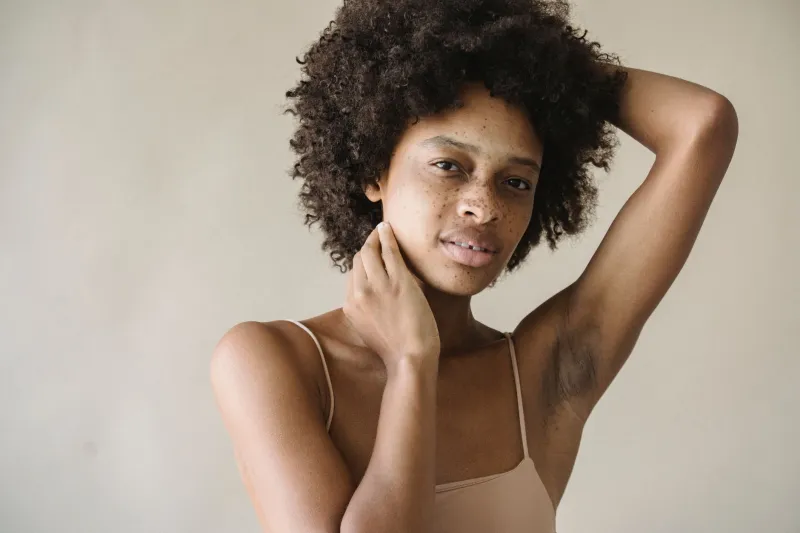
For a long time, flawless meant invisible. Invisible pores. Invisible freckles. Invisible evidence that you were, in fact, a living, breathing human being. Beauty counters were stocked with products promising to blur, fill, erase, and smooth — and we bought them by the armful. But somewhere between the rise of skincare TikTok and a collective cultural exhale, the script started to flip.
Real skin — textured, freckled, lined, and gloriously imperfect — is having its moment. And honestly? It's about time.
The Long Shadow of Airbrushed Culture
Let's be real: American beauty standards didn't arrive in a vacuum. Decades of magazine covers, Hollywood close-ups, and eventually Instagram feeds trained us to see texture as a problem. Retouching became so normalized that even professional makeup artists were expected to create a face that looked like it had been run through Photoshop in real life.
"There was this unspoken rule that skin should look like it had no history," says Los Angeles-based makeup artist Dani Reyes, who has worked on editorial shoots for regional fashion publications. "Every pore had to be filled, every freckle concealed. It was exhausting — for the artists and definitely for the clients."
Dermatologists noticed the downstream effects too. Dr. Simone Walsh, a board-certified dermatologist based in Chicago, says she regularly saw patients coming in distressed about completely normal skin characteristics. "People were bringing in filtered selfies and asking me to make their skin look like that. The filter had become the reference point for what skin should look like — which is just not rooted in biology."
What Changed, and Why Now
The shift didn't happen overnight, and it didn't come from a single source. It was more like a slow tide — pushed along by a mix of skincare culture going mainstream, the body positivity movement expanding its lens to include complexion diversity, and a generation of beauty creators who were simply done performing perfection.
Influencers like Hyram Yarbro helped normalize talking about skin concerns openly and without shame. Brands like Glossier built entire identities around the idea of skin looking like skin. And when the pandemic hit and everyone was suddenly doing their own makeup at home — often on camera for Zoom calls — the illusion of professional-grade flawlessness got a lot harder to maintain.
"People started seeing their own faces differently," says beauty educator and content creator Nia Ford, who runs a popular skincare-focused channel out of Atlanta. "You're staring at yourself on a screen for eight hours a day. At some point, you either spiral — or you make peace with what you see. A lot of people chose peace."
Texture-Forward Makeup: A New Toolkit
The products and techniques following this shift are genuinely exciting. Instead of heavy full-coverage foundations applied with a damp sponge until every trace of personality is gone, makeup artists are now reaching for skin tints, tinted moisturizers, and lightweight serums that let the skin's natural surface breathe and show through.
Techniques like "skin flooding" — layering hydrating products to create a luminous, almost wet look — intentionally highlight the skin's texture rather than masking it. Freckle pens and tints have become bestsellers, with people adding freckles to their faces. Let that sink in for a second.
"The technique I use most now is strategic coverage," says Dani Reyes. "You spot-conceal only what you want to, and you leave the rest alone. The result looks like a real person, which — shocker — is incredibly beautiful."
Brands are catching up too. Fenty Beauty's foundation range changed the conversation around shade inclusion, but the newer wave of brands is also rethinking finish and coverage as defaults. Jones Road Beauty, founded by legendary makeup artist Bobbi Brown, built its whole ethos around products that work with skin rather than against it.
Celebrating Every Skin Story
What makes this movement genuinely meaningful — not just a trend cycle — is who it includes. Texture isn't a white-skin phenomenon. Hyperpigmentation, melasma, vitiligo, dark spots, and keloid scarring are part of the skin stories of millions of Americans across every background. For too long, the narrow definition of "good skin" centered whiteness and erased the natural characteristics of darker complexions.
"When we talk about embracing texture, we have to talk about all texture," says Dr. Walsh. "Dark spots are texture. Vitiligo is texture. The way melanin-rich skin catches light is texture. If the movement only celebrates freckles on light skin and still treats hyperpigmentation as a 'problem,' we haven't actually moved anywhere."
The beauty brands and creators leading this charge with real integrity are the ones centering that full spectrum — not just aestheticizing one narrow version of imperfection while ignoring others.
How to Start Embracing Your Own Skin Story
If you've spent years in a complicated relationship with your complexion, the idea of "just loving your skin" can feel a little hollow. Here are some genuinely actionable ways to start shifting your relationship with your face:
Try a skin tint instead of full-coverage foundation for one week. See how it feels to let your skin be present in your look. You might be surprised how much you like it.
Audit your skincare goals. Are you trying to improve your skin health — hydration, barrier function, reducing breakouts — or are you trying to make your skin look like a filter? The first is self-care. The second is worth examining.
Follow creators who look like you, unedited. Your algorithm shapes your beauty reference points. Fill it with faces that reflect real diversity of texture, tone, and age.
Give yourself the compliment you'd give a friend. If your best friend pointed out her pores in distress, you'd probably tell her she looked beautiful. Try extending that same grace to your own reflection.
Skin texture isn't a flaw to be corrected — it's evidence of a life lived in a body, exposed to sun and stress and laughter and time. Every pore, every freckle, every fine line is part of a face that tells a story. And at The Face of Beauty, we believe every one of those stories is worth celebrating.